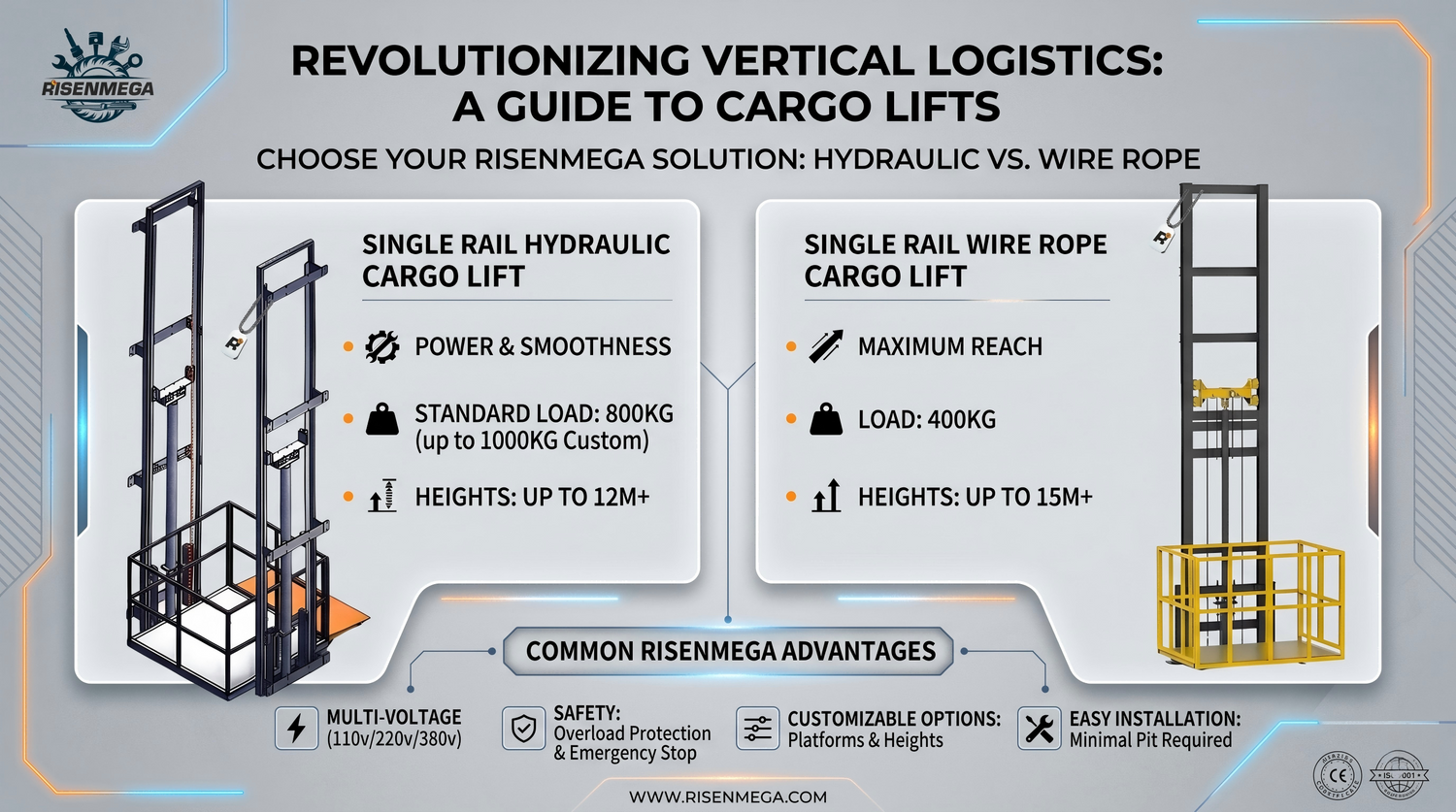
Locating the right equipment aimed at transporting shipment represents a challenging endeavor.The handbook studies the landscape of shipment lift systems, covering various kinds of lifts, from elementary scissor lifts and motorized platforms to more sophisticated vertical delivery systems.Let us scrutinize factors like heft requirements, territory constraints, and expense considerations to enable you elect the top route for your establishment.In case you are dealing with hefty pallets, hefty machinery, or common freight, understanding your requisites is crucial for a profitable implementation.
Cargo Hoist Alternatives for Your Company
Selecting the most fitting material elevator is a vital decision for any venture that operates with significant loads of products.There is a expansive collection of possibilities available, each with their own pros and negatives.Evaluate attentively your distinct needs. Typical choices include:
- Gear-Mechanized Elevators: Perfect for lower altitudes and functions.
- Traction Elevators: Offer advanced velocity and allowance for taller edifices.
- Pallet Lifts: Manufactured for transporting packages and other weighty commodities.
Control Rail Baggage Lifts: Performance and Reliability
State-of-the-art guide rail consignment lifts are revolutionizing item handling in storage centers, offering a significant enhancement to both output and reliability.This kind of systems utilize a reliable trackway system to precisely relocate solid freights vertically, diminishing the need for manualized management.The included design incorporates diverse security features, including backup slowing methods and resilient fabrication, ensuring agents and neighboring areas are secured from potential dangers.Finally, these lifts provide a budget-friendly and reliable solution for companies seeking to optimize their transportation functions.
Determining the Ideal Products Lifter for Mechanical Specifications
Deciding on the fitting goods hoist for a production premises requires rigorous assessment.Many aspects must be scrutinized, including the height of the required conveyance, the heft limit of the supplies being transported, and the usable territory. Besides, reliable elements and conformity with applicable directives are decisive. Ignoring these factors could cause in underperformance and expected threats.
Boons of a Cargo Elevator in Depot Activities
Introducing a materials elevator within a storeroom can yield remarkable perks to overall processes. These contraptions extensively reduce the need for non-automated handling of voluminous goods, accordingly diminishing the risk of operator harm. Moreover, a cargo lift increases productivity by empowering faster flow of goods over distinct layers, ultimately bringing to enhanced warehousing and less expenses.
Comprehending Varied Categories of Products Transporters
Shifting heavy merchandise within a structure necessitates specialized equipment, and understanding the diverse types of goods elevators is necessary. They are unlike your average passenger elevators; those are engineered to carry ample loads and often feature distinctive characteristics.You can analyze some standard options. First, there are commercial elevators, hardy systems designed for heavy-duty use in workshops. Then, we have level elevators, which feature a horizontal platform to move loads vertically. Lastly, folding arm lifts offer a straightforward and capable solution for conveying loose goods.
- Factory Elevators: Principally used in manufacturing environments.
- Base Elevators: Well-suited for wrapped materials.
- Bulk Lifts: Supply a steady hoisting solution.
Conserving Consignment Lifts with Rail Solutions
Concerning stockrooms facing scarce floor capacity, cutting-edge cargo platforms utilizing support mechanisms offer a effective option. Those units reduce the area required while still carefully transferring solid products. That layout typically involves a elevated progressing deck that adheres to a pre-defined guide, facilitating for superior employment of the accessible locational expanse.
Exploiting Elevated Space with a Supplies Hoist
In up-to-date depots, maximizing elevated area is necessary for performance. A load hoist offers a potent resolution to this complication. These systems facilitate you to group stock elevated than traditional racking systems, accordingly expanding your holding. Consider the perks:
- Decreased area requirements
- Optimized object management
- Augmented efficiency rate
- Prospective subduction in labor charges
Establishing a Consignment Lifter: Essential Facts
Planning to introduce a cargo lift can be a considerable investment for your company, but ensuring a effective process requires careful strategy. First, you’ll required evaluate your particular requirements – goods elevator including the mass of the cargo you’ll be shifting and the range the lift will cross. Comprehensive site verification is also paramount, including checking structural integrity and available space. You’ll likely need earn the obligatory permissions from local officials. Finally, consistently contract a licensed installer to secure reliable operation and adherence with statutory codes.
- Take into account weight limits.
- Validate site openness.
- Collect the proper permissions.
- Retain a expert worker.
